For more information, click here.
Monday, August 22, 2011
Friday, August 19, 2011
AIJC, Coalition Urges Congress to Take Lead on Freedom of Information Bill
After winning under the banner of "Kung walang corrupt, walang mahirap" (There would be no poverty if there is no corruption), many media organizations and advocates had high hopes that under President Benigno S. Aquino III, the Freedom of Information Bill, perhaps one of the most controversial bill in the House of Representatives, would be passed.
The FOI bill assures the public access to all government papers and transactions, for as long as it would not compromise national security. This right was guaranteed by the 1987 Philippine constitution. But the bill is yet to be passed and has been seemingly watered down into nothing but restrictive policies.
Lately, Aquino has been very silent on the issue of the FOI. Presidential spokesperson Edwin Lacierda, in defense of the president, said that Aquino still has four years and nine months before his term would end.
Below is the statement of FOI advocates urging the Congress to take action:
As PNoy defaults on FOI, Congress must now take the lead
"Kung talagang gusto, hahanap ng paraan. Kung talagang ayaw, hahanap ng dahilan."
This is exactly where President Benigno Simeon C. Aquino III stands on the proposed Freedom of Information bill, which seeks only to enforce a constitutionally guaranteed right of the people to know and secure documents in the custody of government agencies.
The President says he supports the bill in principle, but that he has “specific questions and concerns” that he wants to be settled, before he endorses it as his priority legislation. His concerns, the President says, include his fears that FOI could unlock documents that might expose people to kidnappers, cause government losses in right-of-way cases because of property price speculations, and many other unwanted results.
Yet over the last 14 months in office, he has failed to answer and settle these concerns, and for as long a period, the FOI bill has languished in limbo.
A Malacañang study group on the FOI had told us about other, bigger concerns of the President. Through Deputy Speaker and Quezon Rep. Erin Tañada, chief author of the FOI bill in the House of Representatives, we informally and indirectly engaged the study group in constructive dialogue over the last six months.
Two critical concerns on exceptions were addressed over time in three successive drafts of the FOI bill that the Palace study group crafted – “national security” and the President’s deliberative process. These were in addition to existing exceptions in the FOI bill based on national defense and foreign affairs; military or law enforcement operation; privacy; trade, industrial or commercial secrets; drafts of adjudicatory decisions; privileged information in legal proceedings; executive session of Congress; and exceptions recognized in other statutes or the Constitution.
The legislative process practically ground to a halt, precisely because the President and his study group said they were drafting their own FOI bill. We had hoped that by the opening of the second regular session of Congress, the Palace draft would be done, and the President would have certified it as a priority measure.
We had hoped as much because we still remember: As the presumptive winner of the May 2010 elections, the President had promised to assign first priority to the FOI’s passage into law, and in June 2010, as president, he launched his government on the principles of transparency, accountability, and good governance.
This is the first time we are hearing that the President has new concerns about what he says could be the undesirable results of an FOI law. His study group had not raised them at all. And it appears like pending these and even new and more concerns he could raise in the future, the FOI bill will languish in limbo for longer.
The President assures us that he supports the FOI bill “in principle” but that because his concerns linger, he could not act on his own study group’s version of the FOI bill. By all indications, the FOI bill remains stuck at the Palace.
What seems like a state of principled indecision in Malacañang makes us wonder: Is the President part of the solution, or part of the problem, in assuring the passage of the FOI bill? Or perhaps neither, because he has chosen to pass up a chance to lead on a strategic policy issue that the Constitution has so clearly mandated him and all public officials to uphold and enforce – the people’s right to know.
The fate of the FOI bill was a leadership call on the President. We had not wished he would default. Yet because he has, we refocus our efforts on the House of Representatives and the Senate, which should, without need for cue or advice from Malacañang, act now and quickly on the FOI bill.
We do so with eyes wide open that as it was in the 14th Congress under then President Gloria Macapagal Arroyo, the FOI bill could face rough, tough sailing in the 15th Congress. While Mrs. Arroyo and her allies vigorously opposed and killed the bill before it could be ratified, President Aquino now seems to want to let the bill waste away, and fade in time.
THE RIGHT TO KNOW, RIGHT NOW! COALITION/
BANTAY FOI, SULONG FOI! CAMPAIGN
Monday, July 18, 2011
AIJC supports Freedom of Information Bill
The Asian Institute of Journalism and Communication is an advocate of the passage of the Freedom of Information (FOI) Bill, working with other organizations under the Access to Information Network (ATIN) umbrella.
AIJC and other FOI advocates are once again working for the passage of the FOI Bill in the 15th Congress. Versions of the bill have been filed by lawmakers both at the Senate and at the House. FOI advocates are working with its sponsors and have attended the first hearings on the bill in both Houses.
For the first time in nine years, the FOI Bill almost passed in the 14th Congress, mainly due to the movement initiated by ATIN through the Right to Know Right Now! campaign. It mobilized the mass media, academe, NGOs, international FOI advocates, and even some government workers to work for the passage of the bill. At a critical hour, however, the House of Representatives failed to ratify the bicameral version of the FOI Bill due to lack of quorum.
AIJC and other FOI advocates are once again working for the passage of the FOI Bill in the 15th Congress. Versions of the bill have been filed by lawmakers both at the Senate and at the House. FOI advocates are working with its sponsors and have attended the first hearings on the bill in both Houses.
Tuesday, July 12, 2011
Graduate School Goes to Bohol for Rare Program on Sustainable Fishing
AIJC Graduate School Dean Madeline Quiamco served as resource person in the third phase of the Rare Program on Sustainable Fishing in the Philippines held at Panglao Island in Tagbilaran, Bohol.
Dean Quiamco discussed Social Marketing in the Philippines with the 11 Rare fellows who will soon implement their plans to improve management of Marine Protected Areas (MPAs) in their respective localities. In the same training another AIJC faculty member, Dr. Paz Diaz, conducted a Skype session with the fellows on collaborative writing.
Tuesday, June 28, 2011
Training, training, training
Aside from its graduate school, the Asian Institute of Journalism and Communication also takes part in providing training in corporate communication, communication consultancy, strategic communication planning, new emerging technologies,among others, both for public and private companies.
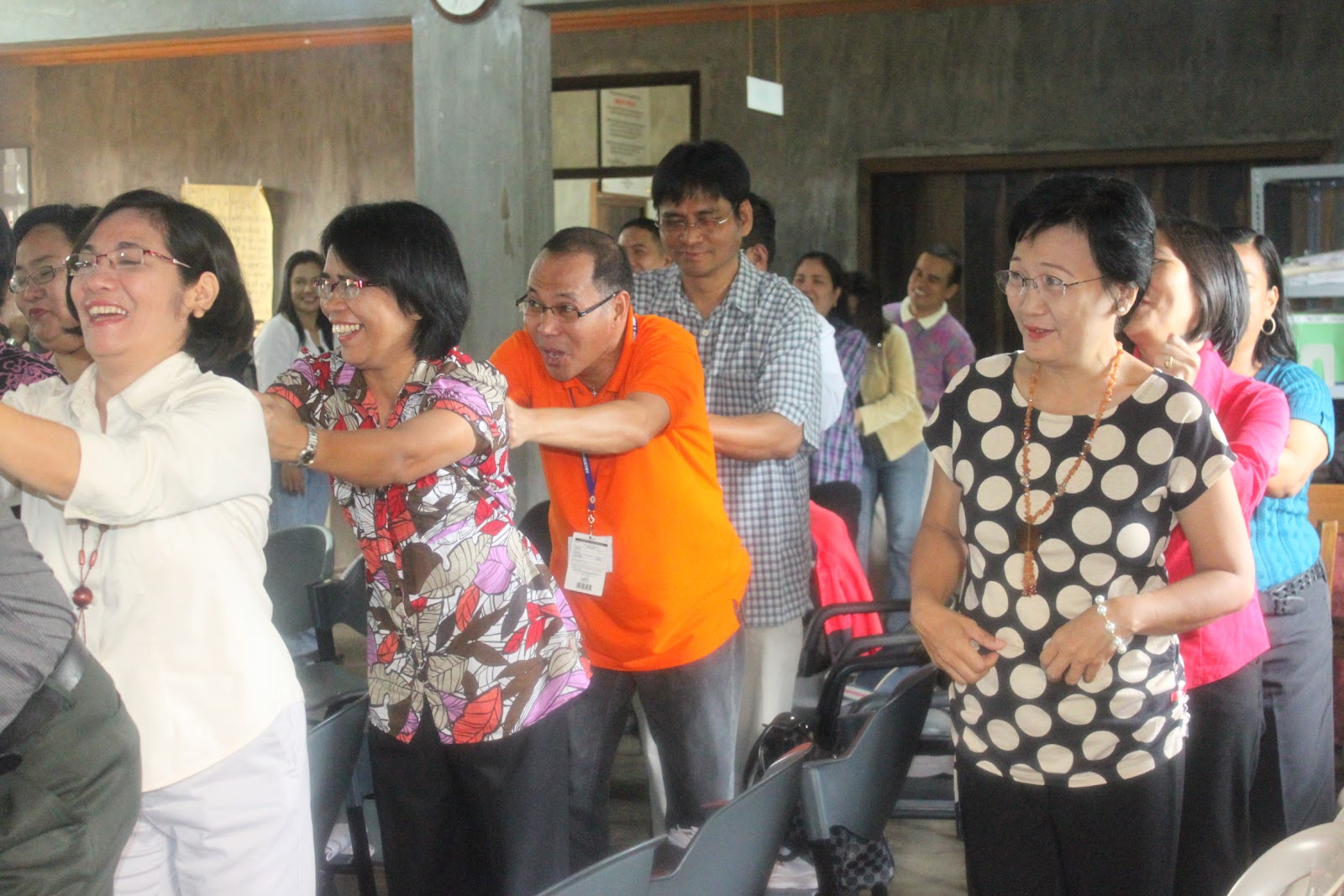
For one, the staff of the Department of Trade and Industry in Region 2 had a training on Advocacy and Communication Skills Enhancement Training from January 17 to 21, 2011. Here are some of the pictures:
On May 25 to 26, 2011, on the other hand, the AIJC conducted a training on Effective Techinical Writing and Editing at the International Labor Organization Auditorium in Makati City. The participants were composed of personnels from the International Labor Organization and the United Nations Population Fund.
True to its commitment in harnessing "the power of communication in promoting the common good," the AIJC will continue its mission in providing training to all communicators. For inquiries, email info@aijc.com.ph
For one, the staff of the Department of Trade and Industry in Region 2 had a training on Advocacy and Communication Skills Enhancement Training from January 17 to 21, 2011. Here are some of the pictures:
On May 25 to 26, 2011, on the other hand, the AIJC conducted a training on Effective Techinical Writing and Editing at the International Labor Organization Auditorium in Makati City. The participants were composed of personnels from the International Labor Organization and the United Nations Population Fund.
True to its commitment in harnessing "the power of communication in promoting the common good," the AIJC will continue its mission in providing training to all communicators. For inquiries, email info@aijc.com.ph
Sunday, June 12, 2011
On Going Classes
It's the start of another term here at AIJC Graduate School. Below is the list of on going classes from June 6 to August 6, 2011.
For more information, click here.
Craft of Communication Tuesday, 5:30-8:30pm | Dr. Madeline B. Quiamco Dean, AIJC | ||
Statistics Applied to Communication Thursday, 5:30-8:30pm | Dr. Joey Alagaran Faculty, Miriam College Project Consultant, AIJC | ||
Advanced Communication Theory Wednesday, 5:30-8:30pm | Prof. Gerry Josue Director, Information Planning Service Commission on Appointment | ||
Communication Research Methods Saturday, 9:00 am - 12 nn | Dr. Paz Diaz VP for Academic Affairs Roosevelt College, Marikina City | ||
| Communication and Governance Monday or Friday, 5:30-8:30 pm | Prof. Angelo Timoteo Diaz de Rivera Former Commissioner, CICT President, IT Enterprises Information Capital Technology Ventures. Inc. (ICTV) | ||
Communication Issues | TO BE ARRANGED | ||
Investigative Journalism | Seminar Series |
For more information, click here.
Subscribe to:
Posts (Atom)